
.png)
Bulgaria 🌍
Varna ✈️
Uri Travel✈️ | Bulgaria 🇧🇬 | Varna Attractions Map | Varna itinerary
Welcome to the most up-to-date guide for Varna 2026.
Bulgaria's summer capital is a perfect blend of golden beaches and lush parks. In this guide, I have gathered the must see attractions in Varna, from the iconic Dormition of the Mother of God Cathedral and the expansive Sea Garden to the city's unique historical landmarks.

✈️
✈️Asia
🇮🇳 India | Hyderabad
🇮🇳 India | Mumbai
🇮🇳 India | Pune
🇮🇱 Israel | North
🇮🇱 Israel | South
🇸🇬 Singapore
🇦🇪 UAE | Dubai
🇹🇭 Thailand
✈️Europe
🇦🇱 Albania
🇧🇬 Bulgaria | Varna
🇨🇾 Cyprus | Paphos
🇨🇿 Czech Republic | Prague
🇩🇰 Denmark
🇬🇧 England | London
🇫🇷 France | Paris
🇬🇪 Georgia | Batumi
🇩🇪 Germany | Munich
🇬🇷 Greece | Athens
🇬🇷 Greece | Northern Greece
🇭🇺 Hungary | Budapest
🇮🇹 Italy | Rome
🇲🇪 Montenegro
🇳🇱 Netherlands | Amsterdam
🇵🇱 Poland | Warsaw
🇷🇴 Romania
🇷🇸 Serbia | Belgrade
🇪🇸 Spain | Barcelona
🇪🇸 Spain | Madrid
🇻🇦 Vatican
✈️America
🇨🇦 Canada | Niagara Falls
🇨🇦 Canada | Toronto
🇲🇽 Mexico | Mexico City
🇺🇸 United States | Boston
🇺🇸 United States | Las Vegas
🇺🇸 United States | Los Angeles
🇺🇸 United States | New York
Varna combines spectacular historical landscapes in the city itself and mesmerizing beaches.
Varna is the third largest city in Bulgaria, located about 379 kilometers northeast of Sofia, the capital of Bulgaria, and is on the coast of the Black Sea. Varna is considered one of the largest and most important port cities on the Black Sea coast and the most important and central port city in Bulgaria.
Throughout history, Varna has been an important and influential city thanks to its proximity to the sea and being a major port city, however, in recent years, Varna has enjoyed a renewed revival, mainly thanks to the ever-growing tourism there, the wonderful beaches that developed at a dizzying pace and turned the entire area into Bulgaria's resort area a kind of "Bulgarian Riviera" Enchanted by the shores of the Black Sea.
✈️

Frequently Asked Questions
- 01
- 02
- 03
- 04
- 05
- 06
- 07
- 08
- 09
- 10
1. The Stone Desert | Pobiti Kamani
Pobiti Kamani, known as the Stone Desert or the Stone Forest, is a rare natural phenomenon located in northeastern Bulgaria near the city of Varna. It is one of the most unusual landscapes in Europe, where tall stone columns rise directly from sandy ground, creating a scene that feels almost otherworldly.
The area is covered with dozens of limestone pillars that can reach heights of up to ten meters. Some are hollow, others solid, and many appear as if they were deliberately placed upright in the sand. This visual effect is the reason for the name Pobiti Kamani, which in Bulgarian means stones planted in the ground.
Scientists believe these formations were created around fifty million years ago when the region was covered by a shallow sea. Over time, mineral rich processes hardened parts of the sand into stone, while wind and erosion removed the softer material around them, leaving the columns exposed. Although older theories suggested a connection to coral reefs or human activity, modern research supports a natural geological origin.
Pobiti Kamani is considered a protected natural landmark and holds special importance in Bulgaria as the country’s first officially protected nature site. Beyond its geological value, the area also supports unique plant and animal life adapted to the dry sandy environment.
Website: Stone Forest (varna.bg)

2. Dormition of the mother of God Cathedral
The Cathedral of Varna is considered one of the most prominent and recognizable symbols of the city. Construction of the cathedral, which began at the end of the 19th century and ended only at the beginning of the 20th century, offers a particularly impressive facade as well as a very rich interior design. It has magnificent murals, stained glass works, and icons. It is recommended to climb the stairs (133 in number) to its bell tower, if only to enjoy the spectacular view of the city.
Opening hours: The place is open to visitors throughout the week
Cost: Free
Website: The Assumption of the Mother of God Cathedral (varna.bg)

3. Roman Thermae Varna
Roman Thermae in Varna refers to the ancient Roman baths (also called Roman Baths or Odessos Roman Thermae) located in the Black Sea city of Varna in northeastern Bulgaria.
They were part of the old Roman city of Odessos, which became part of the Roman Empire in the 1st century AD. The thermae were constructed toward the end of the 2nd century AD and remained an important public place in the city until about the end of the 3rd century.
These baths are the largest ancient building discovered in Bulgaria and cover around 7000 square meters, making them the largest Roman baths on the Balkan Peninsula and the fourth-largest preserved Roman thermae in Europe after famous complexes like the Baths of Caracalla and Diocletian in Rome.
The ruins are impressive because of their scale and architectural design. The vaulted structures once reached over 20 meters in height. The complex included the typical Roman bathing areas such as changing rooms, cold and hot water pools, and spaces for socializing, exercising and relaxation. The baths were heated by an advanced hypocaust underfloor heating system that distributed warm air through the rooms.
Today the Roman Thermae in Varna are an archaeological site open to visitors, and are often used in summer for cultural events like concerts and performances. They lie in the older part of the modern city between San Stefano and Khan Krum streets and are part of the Varna Archaeological Museum’s sites.
Website: Roman Thermae (varna.bg)

4. The Sea Garden
A large public park adjacent to the beach promenade. The park is full of spacious and beautifully maintained gardens, shady corners near impressive statues and ice cream stands and cafes. The park also has some particularly interesting places such as the observatory and the naval museum.
Website: Sea Garden (varna.bg)

5. Aldeja Rock Monastery
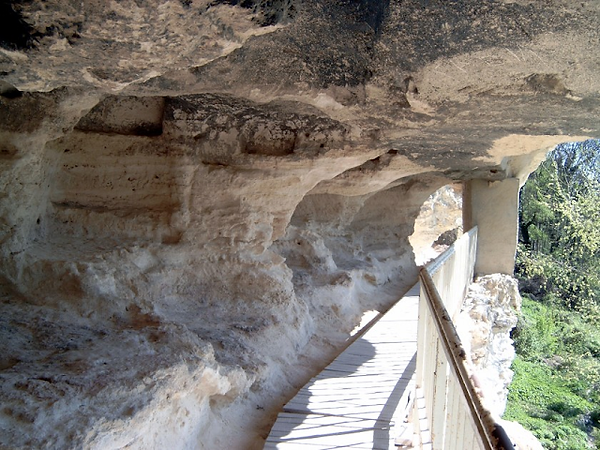
Right on the outskirts of the city, about a 20-minute drive, is the Aldja Rock Monastery, an ancient Orthodox monastery, carved into rocks into man-made caves. Inside the monastery you can still see parts of surviving mosaics and remnants of wall paintings. The monastery itself was established in the 11th century when the first monks settled in the ancient caves that were already inhabited at the beginning of the Byzantine period. Legend has it that sometimes at night, you can still see the ghosts of the monks who used to live there.
Website: Aladzha Monastery (varna.bg)
6. "Golden Sands" beach
The highlight of Varna is undoubtedly its coastline. What gave Morena its popularity and made it a classic of Bulgarian tourism is undoubtedly the wonderful coastal strip of the city consisting of three main beaches Sunny Day, Riviera, Golden Sands. These beaches have won the "blue flag" of the European Union, which is considered a kind of "standard" or badge of honor for the cleanest, most preserved and protected beaches in the world. The beaches of Varna are some of the most beautiful in the region, however if you go a few kilometers outside Morena (18 km to be exact) you will reach one of the most beautiful and natural areas in Bulgaria known as the "Golden Sands". The beaches of Varna offer lots of sun, attractions and water activities, cafes and restaurants On the coastline and of course a luxurious strip of hotels.

======================
Hoping that you found the blog useful and helpful!
I'm already writing the next blog 😉
======================
======================
May the blog power be with you! ✈️