

Romania 🌍
Uri Travel ✈️ | Romania 🇷🇴 | Romania Attractions Map |
Romania itineraries | Therme Bucuresti Baths |
Romania with Children | Brasov Round Trip
Welcome to the most up-to-date guide for Romania 2026.
The country considered the pearl of Eastern Europe (with Bucharest known as the "Paris of the East") is a rare combination of rich historical heritage, wild nature, and modern tourist attractions. In this guide, I have gathered the must-see attractions in Romania, from Therme spa, the mysterious castles of Transylvania, and the landscapes of the Carpathian Mountains.

✈️
✈️Asia
🇮🇳 India | Hyderabad
🇮🇳 India | Mumbai
🇮🇳 India | Pune
🇮🇱 Israel | North
🇮🇱 Israel | South
🇸🇬 Singapore
🇦🇪 UAE | Dubai
🇹🇭 Thailand
✈️Europe
🇦🇱 Albania
🇧🇬 Bulgaria | Varna
🇨🇾 Cyprus | Paphos
🇨🇿 Czech Republic | Prague
🇩🇰 Denmark
🇬🇧 England | London
🇫🇷 France | Paris
🇬🇪 Georgia | Batumi
🇩🇪 Germany | Munich
🇬🇷 Greece | Athens
🇬🇷 Greece | Northern Greece
🇭🇺 Hungary | Budapest
🇮🇹 Italy | Rome
🇲🇪 Montenegro
🇳🇱 Netherlands | Amsterdam
🇵🇱 Poland | Warsaw
🇷🇴 Romania
🇷🇸 Serbia | Belgrade
🇪🇸 Spain | Barcelona
🇪🇸 Spain | Madrid
🇻🇦 Vatican
✈️America
🇨🇦 Canada | Niagara Falls
🇨🇦 Canada | Toronto
🇲🇽 Mexico | Mexico City
🇺🇸 United States | Boston
🇺🇸 United States | Las Vegas
🇺🇸 United States | Los Angeles
🇺🇸 United States | New York
✈️
Romania is a country of amazing beauty with a lot of authenticity of the past. We experienced a trip that the children will remember for many, many years to come. We climbed mountains, we entered the bowels of the earth, we were princes (sorry, I have 4 sons) in the palace and warriors in the fortresses we tasted everything of everything. Finally, my wife (who has Romanian roots) tasted papaanche.
In short - amazing!!!!
Uri Travel Tips💛:
-
Trip outline, round trip from Brasov as a landmark

Frequently Asked Questions
- 01
- 02
- 03
- 04
- 05
- 06
- 07
- 08
- 09
- 10
1. Therme Bucharest
An excellent spa with thermal water pools, an experience suitable for all ages, it is very close to OTP airport, and it is recommended to combine with arrival or departure.
There are three complexes, you can pay for a specific complex or for all the complexes:
-
Galaxy - Suitable for children and adults - pools and slides (yellow tube - for adults, blue tube for children)
-
The Palm - restricted to ages 16 and over, a comfort zone for adults who want to relax
-
Elysium - Spa, limited to ages 16 and over (I recommend booking a massage in advance)
The entrance fee to Terme Bucharest is according to time:
-
3 hours
-
4.5 hours
-
All day
The price itself is determined by time and by your choice of which of the three complexes to enter. You can buy a card that includes everything
At the entrance you get a personal wristwatch (one for each person) and at the end of the time at the exit, you pay for extras (extra time spent at the place, massage, meal at the restaurant, drink at the pool bar)
There is no need to carry around cash or credit since you can also pay in the bar inside the pool, in the restaurants, and in the spa using the watch you receive.
Each person gets a locker free of charge, and you can leave all your belongings, bags, cellphones, and money in it. Opening and closing the locker is done again with the help of that person's unique watch
Uri Travel Tips💛:
-
It's best to avoid weekends if you can, as it gets very crowded
-
You must arrive with towels and slippers in advance, if you don't have them, they charge per person for renting a towel
Website: Start | Therme Bucharest
Watch the Video🍿
2. Salina SLANIC PRAHOVA Salt Mine
Salina Slănic Prahova, also known as the Slănic Prahova Salt Mine, is one of the largest and most impressive salt mines in Europe, located in Romania, about 100 kilometers north of Bucharest.
The mine was opened to visitors in 1972 and reaches a depth of around 200 meters underground. Inside, visitors enter a vast underground space with massive salt walls, a constant cool temperature, and very clean air that is rich in salt particles. Because of this, the mine is well known for its therapeutic benefits, especially for people with respiratory conditions.
Salina Slănic Prahova features wide underground halls, walking paths, playgrounds for children, sports areas, a chapel, and spaces for relaxation. It is suitable for families and allows visitors to spend several hours inside in a unique and safe environment.
The temperature inside remains stable throughout the year, making it a popular attraction in both summer and winter.
After a 15-minute shuttle ride to the heart of the earth (rounds and turns, not suitable for those with claustrophobia), you reach 250 meters underground. Then, a huge hall 70 meters high with walls showing the laminations of the salt layers is revealed. Recommended for those suffering from breathing problems or asthma.
Children have Gymboree sessions for an additional fee.
The mine is the largest in Europe, the mine was created by the residents of the town of Thessaloniki in their search for salt to preserve the meat.
Uri Travel Tips💛:
-
it is cold inside, 12 degrees, it is recommended to take coats!!!!
Website: Slanic Prahova, Salt mine - Romanian Monasteries
Opening hours: Every Day 08:30 - 15:00, Mondays - closed

3. Gondola Sinaia
The cable car in the town of Sinaia is the closest to Bucharest, about 125 km from the capital of Romania. The cable car has 2 parts, one starts from the town at a height of 1400 meters, another cable car continues up to a height of 2000 meters above sea level. At the highest observation point, on top of the Bucegi mountains.
The view is spectacular the beauty and the view is stunning as you will see in the panoramic video I took, make sure you arrive on a clear day with good visibility, I still climbed a few tens of meters to the top to the highest observation point.
Uri Travel Tips💛:
-
You can pay only for the first part (up to 1400 meters) or for both parts (up to 2000 meters)
Watch the Video🍿
4. Castelul Peleş
Castelul Peleș is one of the most beautiful and famous castles in Romania, located in the mountain town of Sinaia, at the foot of the Carpathian Mountains. The castle is surrounded by forests and alpine scenery, giving it a fairytale appearance.
The castle was built between 1873 and 1914 as the summer residence of King Carol I of Romania. It is considered a masterpiece of Neo Renaissance architecture and was one of the first castles in Europe to be fully powered by electricity.
Inside, Peleș Castle features richly decorated rooms, hand carved wood, stained glass windows, fine artworks, and an impressive collection of weapons and armor from around the world. Each room is designed in a different style, reflecting the artistic tastes of the time.
Today, Castelul Peleș operates as a museum and is one of Romania’s top tourist attractions. It offers visitors a unique combination of royal history, architectural elegance, and stunning natural surroundings, making it a must see stop when traveling through the Carpathian region.
Website: Acasă · Muzeul National Peleș

5. Pestera Dambovocioara
Peștera Dâmbovicioara is a natural limestone cave located in Dâmbovicioara, a small mountain village in central Romania, near the Piatra Craiului Mountains. It is one of the most accessible and family friendly caves in the country.
The cave is relatively short, measuring about 250 meters, which makes it easy to explore even with children. Inside, visitors can see impressive rock formations such as stalactites stalagmites and limestone columns shaped by water over thousands of years.
Peștera Dâmbovicioara has a long history of human use. Archaeological discoveries show that the cave was inhabited during prehistoric times, adding historical significance to its natural beauty.
The cave is illuminated and guided tours are available, allowing visitors to safely experience the underground environment. Its location in a scenic mountain valley makes it a popular stop for travelers exploring the Carpathians, especially those visiting Bran, Brașov, or Piatra Craiului National Park.
Peștera Dâmbovicioara offers a pleasant mix of nature history and adventure and is well suited for a short educational and enjoyable visit.

6. Bran Castle | Dracula
Bran Castle is one of the most famous landmarks in Romania, located near the town of Bran, not far from Brașov, at the edge of the Carpathian Mountains.
Often referred to as Dracula’s Castle, it is closely linked to the legend of Vlad the Impaler, although there is no clear historical evidence that he lived there.
The castle was built in the 14th century, around 1377, as a defensive fortress guarding a strategic mountain pass between Transylvania and Wallachia. Its dramatic hilltop position, narrow stairways, secret passages, and medieval towers give it a mysterious and atmospheric character.
In the 20th century, Bran Castle became a royal residence, most notably for Queen Marie of Romania, who played a major role in restoring and decorating the castle. Many of the interior rooms reflect her personal taste and vision.
Today, Bran Castle operates as a museum showcasing medieval history, royal collections, and exhibitions related to Romanian culture and the Dracula myth. It is one of the most visited attractions in the country, offering visitors a unique blend of history legend and stunning mountain scenery.
Website: Home – Bran Castle - Bran Castle

7. Superland Brașov
Superland Brașov is a large indoor amusement and entertainment park located in Brașov, making it a popular attraction for families and children.
The park offers a wide range of activities including inflatable play areas trampolines slides climbing zones arcade games and attractions suitable for different age groups. Because it is fully indoors Superland is a great option in all seasons especially during cold or rainy weather.
Superland Brașov is designed as a family friendly space with safe play areas for younger children as well as more active zones for older kids and teenagers. Seating areas and food options are available allowing parents to relax while children enjoy the attractions.
Website: Superland - Playground - Brașov Tourism (brasovtourism.app)

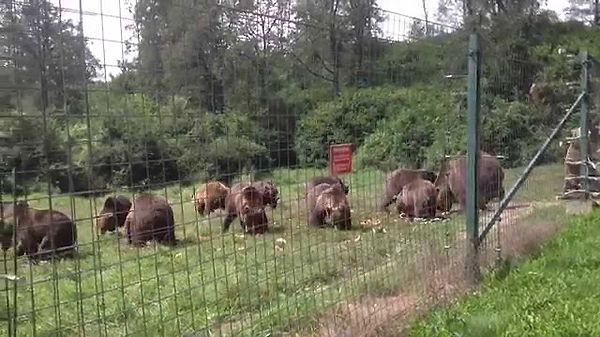
8. Libearty Bear Sanctuary
Libearty Bear Sanctuary is the largest bear sanctuary in Europe, located near Zărnești, close to Brașov
It was established in 2005 by the Millions of Friends Association to rescue brown bears that had been kept in captivity under poor conditions, such as in cages, roadside attractions, or circuses.
The sanctuary covers more than 60 hectares of forest and offers a natural environment where rescued bears can live freely, climb trees, swim in ponds, and behave as they would in the wild. Today, the sanctuary is home to over 100 brown bears, each with a unique rescue story.
Visitors can tour the sanctuary on guided walks along raised paths, learning about the bears’ backgrounds, rehabilitation process, and the importance of wildlife protection. Tours are educational and emphasize respect for animals and conservation.
Website: Home - Asociația Milioane de Prieteni (millionsoffriends.org)
9. Râșnov Fortress
Râșnov Fortress is a well preserved medieval fortress located above the town of Râșnov.
Perched on a rocky hilltop, it offers panoramic views of the surrounding Carpathian Mountains and the valleys below.
The fortress was built in the 13th century by Teutonic Knights and later expanded by local Saxon communities. Its main purpose was to protect villagers from invasions, especially during Ottoman raids. Unlike royal castles, Râșnov Fortress functioned as a refuge, providing shelter for entire communities during times of danger.
Inside the fortress walls, visitors can see remnants of homes, storage rooms, a school, and a small chapel, reflecting daily life in the Middle Ages. One of the most famous features is the deep well inside the fortress, linked to local legends.
Today, Râșnov Fortress is a popular tourist attraction, accessible by foot or funicular. It combines historical significance, dramatic scenery, and family friendly exploration, making it a must visit site in the Brașov area.

10. Dino Park
Dino Park Râșnov is an outdoor family and educational theme park located near Râșnov.
The park is centered around life sized dinosaur replicas, offering an interactive and fun experience for children and adults alike.
Visitors can explore paths lined with realistic dinosaurs, learn about their history, size, and habits, and enjoy informative displays about prehistoric life. The park also features playgrounds, adventure zones, a mini zoo, and interactive workshops, making it ideal for family visits.
Dino Park Râșnov combines education, entertainment, and outdoor activity. Its location near Râșnov Fortress makes it easy to pair a historical visit with a playful prehistoric adventure. The park is especially popular in spring and summer, but remains enjoyable year round thanks to its open air and spacious layout.

11. Poiana Brașov
Poiana Brașov is the most famous ski resort in Romania, located in the Carpathian Mountains near the city of Brașov.
Known for its scenic mountain landscapes, well maintained slopes, and modern facilities, it attracts visitors throughout the year.
During the winter, Poiana Brașov offers a variety of ski and snowboarding runs suitable for beginners and advanced skiers, along with ski schools, equipment rentals, and cozy mountain lodges. The resort is equipped with ski lifts and gondolas, making it easy to access different slopes.
In the summer, Poiana Brașov transforms into a destination for hiking, mountain biking, horseback riding, and nature walks. Its green meadows, forested trails, and fresh mountain air make it perfect for relaxation and outdoor activities.
The area also features restaurants, cafes, and accommodations ranging from luxury hotels to rustic cabins. Poiana Brașov is ideal for families, adventure seekers, and anyone looking to enjoy the natural beauty of the Carpathians while having easy access to the city of Brașov.
Website: Poiana Brasov

12. Parc Aventura Brașov
Parc Aventura Brașov is an outdoor adventure park located in the forests near Brașov, offering a fun and active experience for families, teenagers, and adventure enthusiasts.
The park features multiple rope courses, zip lines, climbing obstacles, and suspension bridges set among tall pine trees. Courses vary in difficulty, allowing beginners, children, and experienced adventurers to participate safely. Safety equipment such as harnesses and helmets is provided, and trained instructors supervise all activities.
Parc Aventura Brașov is designed to combine physical activity, fun, and nature, making it a perfect destination for team building, family outings, or just a day of outdoor adventure. Its location near the Carpathian Mountains adds beautiful scenery, fresh air, and the opportunity to enjoy the natural surroundings while challenging your skills.
Website: Adventure Park Brasov adventure and fun Brasov (parc-aventura.ro)

13. Telecabina Tampa Cable Car
Tâmpa Cable Car is a popular attraction in Brașov,providing visitors with an easy and scenic way to reach the top of Tâmpa Mountain, which overlooks the city.
The cable car ride is short but offers stunning panoramic views of Brașov, the surrounding Carpathian Mountains, and the city’s historic center. Once at the top, visitors can enjoy hiking trails, observation points, and photo opportunities, as well as a panoramic view of landmarks like the Black Church and the red rooftops of the old town.
Tâmpa Mountain itself is a natural park, with forests and wildlife, making the cable car ride both convenient and a gateway to outdoor activities. The cable car is open year round, though it is particularly popular in spring, summer, and autumn for sightseeing, and in winter for those enjoying the snow and mountain views.
Website: Program, tarife și hartă Telecabina Tâmpa, Brașov — Mountlift.com

14. Strada Sforii
Strada Sforii is considered one of the narrowest streets in Europe. Its name literally means “Rope Street”, referring to its original use in the 17th century as an access route for firefighters and as a shortcut between the main square and the neighborhoods behind the old town walls.
The street is only about 80 meters long and between 1.1 and 1.3 meters wide, making it a unique and quirky attraction for visitors. Walking through Strada Sforii gives a sense of medieval Brașov, with its colorful old buildings, cobblestones, and historical charm.

15. The Black Church | Biserica Neagră
Biserica Neagră (The Black Church) is one of the largest Protestant churches in Eastern Europe. Its construction began in the 14th century and was completed in the 15th century, originally serving the local German (Saxon) community.
The church is known for its impressive Gothic architecture, large organ, and valuable collection of Transylvanian carpets brought by merchants from Anatolia. Its name, “Black Church,” comes from the darkened walls caused by a fire in 1689 that left the exterior blackened.
Inside, visitors can admire tall vaulted ceilings, intricate stained glass windows, and historical artifacts reflecting the city’s Saxon heritage. The church also hosts classical music concerts, particularly organ recitals, taking advantage of its remarkable acoustics.
Website: Biserica Neagră - Șase sute de ani de istorie, credință, frumusețe (bisericaneagra.ro)

16. Council Square | Piata Sfatului
Council Square (Piața Sfatului) is the central historic square of Brașov. The square dates back to the 15th century and was originally used for markets, festivals, and public gatherings.
The square is surrounded by colorful baroque and Gothic buildings, many of which now house cafes, restaurants, and shops. Its cobblestone streets and lively atmosphere make it a perfect place to relax, people watch, or enjoy a meal outdoors.
At the center of the square stands the Brașov Council House, a historic building that today hosts the Brașov History Museum. Piața Sfatului is also a hub for cultural events, concerts, and seasonal markets, including Christmas fairs.

17. Coresi Shopping Resort
Coresi Shopping Resort is a modern shopping offering a wide range of shopping, dining, and entertainment options for visitors.
The mall features both international and local brands, including fashion, electronics, beauty, and home goods stores. It also has a variety of restaurants, cafes, and fast-food outlets, making it convenient for families and tourists to enjoy a meal or snack during their visit.
Coresi Shopping Resort includes entertainment facilities such as a cinema, play areas for children, and seasonal events, making it a popular destination for family outings. Its spacious and modern design ensures a comfortable shopping experience.
Website: Coresi Shopping Resort – Bucurie zi de zi (coresibrasov.ro)

18. Rupea Fortress
Rupea Fortress (Cetatea Rășinari / Castelul Rupea) is a historic medieval fortress located near the village of Rupea, about 50 kilometers north of Brașov
It is one of the oldest archaeological sites in the region, with evidence of human settlement dating back over 2,000 years, including Dacian and Roman fortifications.
The fortress as it stands today was developed during the 14th century and served as a defensive stronghold for the local Saxon community. Its strategic location on a hilltop overlooking the surrounding valley allowed it to control trade routes and protect the population from invasions.
Rupea Fortress features multiple defensive walls, towers, and gates, along with ruins of medieval buildings such as churches, homes, and storage areas. Visitors can climb the stone stairways to explore different levels of the fortress and enjoy panoramic views of the surrounding countryside.
Website: Rupea Fortress: One of Transylvania's Iconic Medieval Sites (uncover-romania.com)

Sighișoara
Drive along the E60 until you reach Sighisoara. It is a beautiful and well-preserved city, which is considered to be the birthplace of Vlad III, he is Dracula. The entire ancient center of Sighisoara has been declared a UNESCO World Heritage Site. It is highly recommended to visit the Clock Tower, Sighisoara Citadel, the Weapons Museum and the birthplace of Vlad III.
19. The Clock Tower | Turnul cu Ceas
The Clock Tower (Turnul cu Ceas) is one of the most iconic historical landmarks in Sighișoara, a city famous for its well preserved medieval architecture. The tower dates back to the 14th century and originally served as the main gate to the fortified city as well as the residence of the town council.
Standing approximately 64 meters tall, the tower features a distinctive roof with wooden figurines representing different characters and virtues, which were added in the 17th century. The clock mechanism, installed in 1670, still functions and marks the hours with small moving figurines.
Today, the Clock Tower houses the Sighișoara History Museum, displaying artifacts related to the city’s medieval past, including furniture, weaponry, and historic documents. Visitors can also climb to the top of the tower to enjoy panoramic views of the citadel, rooftops, and surrounding hills.
Website: Turnul cu Ceas Sighisoara - Program, Vizitare, Istorie (casa-breslelor.ro)

20. Dracula's House
The house of Vlad Tsepes "Dracula" is located in the old part of the city of Sighisoara in the Citadel Square, near the clock tower, it is a valued and intriguing historical site that is one of the most sought after by tourists from all over the world.
The house is the oldest in the city and was built of river stones that were also used to build the fort. Vlad-Dracula was born in this house in 1431 and lived there until 1436 when he moved with his family to Targoviste (The capital of Romania at that time).

21. Sighișoara Citadel
Sighișoara Citadel is a well preserved medieval fortress and historic center located in Sighișoara .
It is one of the few inhabited fortified towns in Europe and is a UNESCO World Heritage Site.
The citadel dates back to the 12th century, originally built by German settlers (Transylvanian Saxons) to defend the area against invasions. It sits atop a hill overlooking the Târnava Mare River, providing strategic views of the surrounding countryside.
The citadel is famous for its preserved architecture, fortified walls, and towers, giving visitors a sense of what life was like in a medieval town. Walking through Sighișoara Citadel is like stepping back in time, making it one of Romania’s most unique and picturesque destinations.
Website: Sighisoara Citadel | The last inhabited fortress in Europe (rolandia.eu)

======================
Hoping that you found the blog useful and helpful!
I'm already writing the next blog 😉
======================
======================
May the blog power be with you! ✈️