

Spain 🌍Barcelona ✈️
Uri Travel ✈️ | Spain 🇪🇸 | Barcelona Attractions Map | Barcelona Itinerary | Camp Nou Tour
Welcome to the most up-to-date guide for Barcelona 2026.
The capital of Catalonia is a rare combination of brilliant architecture and world class football. In this guide I have gathered the Barcelona attractions that you really must see up close.
From Gaudi's masterpieces like the Sagrada Familia and Park Guell to wandering through the alleys of the Gothic Quarter and the famous Ramblas boulevard, you will find it all here.
Additional travel blogs in Spain:
✈️
✈️Asia
🇮🇳 India | Hyderabad
🇮🇳 India | Mumbai
🇮🇳 India | Pune
🇮🇱 Israel | North
🇮🇱 Israel | South
🇸🇬 Singapore
🇦🇪 UAE | Dubai
🇹🇭 Thailand
✈️Europe
🇦🇱 Albania
🇧🇬 Bulgaria | Varna
🇨🇾 Cyprus | Paphos
🇨🇿 Czech Republic | Prague
🇩🇰 Denmark
🇬🇧 England | London
🇫🇷 France | Paris
🇬🇪 Georgia | Batumi
🇩🇪 Germany | Munich
🇬🇷 Greece | Athens
🇬🇷 Greece | Northern Greece
🇭🇺 Hungary | Budapest
🇮🇹 Italy | Rome
🇲🇪 Montenegro
🇳🇱 Netherlands | Amsterdam
🇵🇱 Poland | Warsaw
🇷🇴 Romania
🇷🇸 Serbia | Belgrade
🇪🇸 Spain | Barcelona
🇪🇸 Spain | Madrid
🇻🇦 Vatican
✈️America
🇨🇦 Canada | Niagara Falls
🇨🇦 Canada | Toronto
🇲🇽 Mexico | Mexico City
🇺🇸 United States | Boston
🇺🇸 United States | Las Vegas
🇺🇸 United States | Los Angeles
🇺🇸 United States | New York
✈️
In this blog, I’ll share my experience exploring the stunning city of Barcelona. From its vibrant culture to its incredible architecture, Barcelona offers something for every traveler. I've also included a handy Google Map with all the must-visit attractions listed, so you can easily plan your own adventure.

Frequently Asked Questions
- 01
- 02
- 03
- 04
- 05
- 06
- 07
- 08
- 09
- 10
1. Park Güell
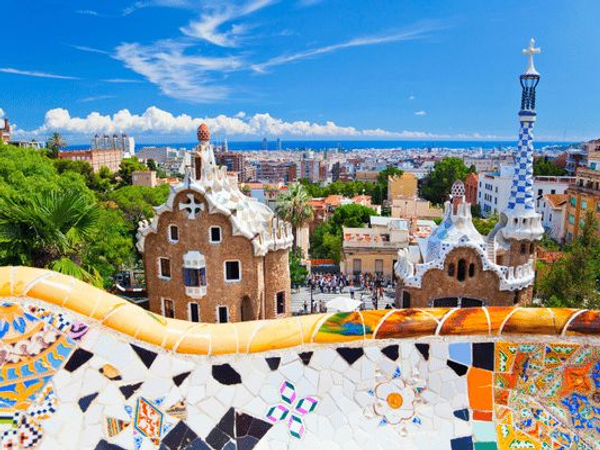
Park Güell is one of Barcelona's most famous landmarks, designed by renowned architect Antoni Gaudí. Located on the Carmel Hill, it offers stunning panoramic views of the city and is a UNESCO World Heritage Site.
The park is a masterpiece of Modernisme (Catalan Art Nouveau) architecture, featuring whimsical shapes, colorful mosaics, and organic forms inspired by nature. Gaudí's creativity is evident in every corner of the park, from its winding pathways to its iconic serpentine bench, adorned with vibrant ceramic tiles.
The Monumental Zone is the main area of the park, home to some of Gaudí's most famous designs, including the Dragon Stairway with the famous trencadís (mosaic) dragon statue at the entrance. The area also includes the Hypostyle Room, a columned space originally intended as a market.
Beyond its architectural wonders, Park Güell also features beautifully landscaped gardens with a variety of native plants. The park blends seamlessly into the surrounding natural landscape, offering a peaceful escape from the city's hustle and bustle.
Website: Home - Park Güell.es - English (parkguell.es)

2. Sagrada Família Church
The Sagrada Família is a world-famous basilica in Barcelona, Spain, designed by the renowned Catalan architect Antoni Gaudí. It is one of the most iconic landmarks in the world and a masterpiece of modernist architecture.
Key Facts About the Sagrada Família:
-
Construction Began: 1882
-
Architect: Antoni Gaudí (took over in 1883, devoted his life to it)
-
Style: Catalan Modernism, Art Nouveau, Gothic Revival
-
Height: When completed, it will be 172.5 meters (566 feet), making it the tallest church in the world.
Unique Features:
-
Intricate Facades:
-
Nativity Façade (completed in 1930) – celebrates Christ’s birth
-
Passion Façade (completed in 1976) – depicts Christ’s suffering
-
Glory Façade (still under construction) – represents salvation
-
-
Towering Spires: The basilica will have 18 towers when finished, symbolizing the 12 apostles, 4 evangelists, the Virgin Mary, and Jesus Christ.
-
Organic Design: Gaudí used nature-inspired forms, with columns resembling trees and stained-glass windows creating breathtaking light effects inside.
-
Gaudí’s Tomb: Gaudí is buried in the crypt of the church.
Website: Sagrada Família: Proveïdors oficials d'entrades - Sagrada Familia
Arrival: Metro, line L2 (purple) or L5 (blue) Sagrada Familia Station

3. Arc de Triomf
The Arc de Triomf in Barcelona is a stunning red-brick triumphal arch that serves as one of the city's most recognizable landmarks. It was built as the main entrance to the 1888 Barcelona Universal Exposition and remains a popular attraction today.
Key Facts About the Arc de Triomf:
-
Location: Passeig de Lluís Companys, near Parc de la Ciutadella
-
Built: 1888
-
Architect: Josep Vilaseca i Casanovas
-
Style: Neo-Mudéjar (inspired by Moorish design)
-
Height: 30 meters (98 feet)
Unique Features:
-
Red Brick Construction: Unlike other triumphal arches made of stone or marble (e.g., the Arc de Triomphe in Paris), Barcelona’s version is made of red bricks, giving it a distinctive look.
-
Elaborate Sculptures & Reliefs:
-
Front Frieze: "Barcelona rep les nacions" ("Barcelona welcomes the nations") by Josep Reynés, symbolizing Barcelona's hospitality.
-
Rear Frieze: "Recompensa" ("Reward") by Josep Llimona, representing science, art, and industry.
-
Coats of Arms: The arch is decorated with the coat of arms of Spain, Catalonia, and other provinces.
-
Bat Symbol: A bat sits atop the central coat of arms, a historic emblem of King Jaume I of Aragon.
-
-
Pedestrian-Friendly Area: The arch leads to a beautiful promenade lined with palm trees, benches, and street performers, connecting to Parc de la Ciutadella.
Website: Arc de Triomf - Visit Barcelona (barcelonaturisme.com)
Arrival: Metro, line L1 (red) Arc de Triomf station

4. Citadel Park
Parc de la Ciutadella located near the historic El Born neighborhood. It was built in the mid-19th century on the site of a former military citadel and has since become a green oasis in the city.
Highlights of Parc de la Ciutadella:
-
Lush Gardens & Green Spaces – The park is filled with trees, walking paths, and picnic spots, making it a favorite place for locals and tourists alike.
-
Cascada Monumental – A stunning fountain designed with input from Antoni Gaudí when he was a young architect. Its grand sculptures, water features, and golden chariot at the top make it one of the park’s main attractions.
-
Boating Lake – You can rent a small rowboat and enjoy a peaceful ride on the lake, surrounded by lush greenery and ducks.
-
Wildlife & Exotic Birds – The park is home to a variety of birds, including parrots, as well as turtles and fish in the ponds.
-
Barcelona Zoo – Located within the park, the zoo was once home to the famous albino gorilla, Snowflake. Today, it continues to house many animal species.
-
Cultural & Historical Monuments – There are several sculptures, a large mammoth statue (perfect for photos), and historic buildings like the Castell dels Tres Dragons, which was originally built as a café-restaurant for the 1888 Universal Exhibition.
Website: Parc de Ciutadella | Barcelona.cat
Arrival: Metro, line L1 (red) station Arc de Triomf or line L4 (yellow) Ciutadella station Vila Olimpica

5. The Ramblas
Las Ramblas (often just called La Rambla) is a famous boulevard in the heart of Barcelona. It stretches for about 1.2 kilometers from Plaça de Catalunya to the Christopher Columbus Monument at Port Vell.
What Makes Las Ramblas Special?
-
Vibrant Atmosphere – Always bustling with tourists, street performers, and vendors.
-
Shops & Cafés – A mix of local and international stores, restaurants, and historic cafés.
-
Markets – The famous Mercado de La Boqueria is right off La Rambla, offering fresh produce, meats, seafood, and local delicacies.
-
Architecture & Landmarks – Features attractions like Gran Teatre del Liceu (Barcelona’s opera house) and Plaça Reial (a lively square with palm trees and nightlife).
-
Street Performers – You’ll find human statues, musicians, and artists creating a lively experience.
Website: Las Ramblas in Barcelona: Essential Guide & Advice
Arrival: Metro, line L3 (green) – get off at one of the three stations of Avenue Liceu, Drassanes or Catalunya. You can also take line 1 (red) to Catalonia Station

6. Barri Gotic
The Gothic Quarter (Barri Gòtic) is the historic heart of Barcelona, known for its narrow medieval streets, gothic architecture, and centuries-old charm. It’s one of the city’s most visited areas, located between Las Ramblas and Via Laietana, stretching from Plaça de Catalunya to the waterfront.
Website: Gothic Quarter (Barri Gotic) Guide, Barcelona
Arrival: Metro, line L3 (green) – get off at one of the three stations of Avenue Liceu, Drassanes or Catalunya. You can also take line 1 (red) to Catalunya Station.

7. La Boqueria
La Boqueria is Barcelona’s most famous and vibrant food market, located on La Rambla, the city's iconic boulevard. It's a must-visit for food lovers, offering a mix of fresh produce, seafood, cured meats, cheeses, sweets, and ready-to-eat tapas.
Opening Hours: Monday to Saturday from 8 AM to 8:30 PM (closed on Sundays).
Arrival: Nearest Metro: Liceu (L3 – Green Line).
Website: Mercat Boqueria Barcelona | Mercat de les Rambles

8. Camp Nou
As a Real Madrid fan, it's impossible not to respect Barcelona's arch-rival.
Camp Nou is the iconic football stadium in Barcelona, Spain, and the home of FC Barcelona since its opening in 1957. It is one of the most famous football stadiums in the world and, before renovations, was the largest stadium in Europe, with a capacity of over 99,000 seats.
Key Facts About Camp Nou:
-
Opened: 24 September 1957
-
Capacity: 99,354
-
Current Renovation: The stadium is undergoing major renovations as part of the Espai Barça project, and FC Barcelona is temporarily playing at the Estadi Olímpic Lluís Companys.
-
New Name: Once renovations are complete in 2026, the stadium will be called Spotify Camp Nou due to a sponsorship deal.
-
Major Events Hosted:
-
UEFA Champions League Finals
-
FIFA World Cup 1982 Matches
-
1992 Summer Olympics Football Matches
-
Countless "El Clásico" matches between Barcelona and Real Madrid
-
Arrival: Metro, line L3 (green),Palau Reial Station
Website: Barça Stadium Tour & Museum | FC Barcelona Official Channel
Watch the Video🍿

9. Plaza Espanya | Font Màgica
Plaza Espanya in Barcelona is another major public square, and it’s known for its striking architectural features and vibrant surroundings. One of the highlights of this area is the Font Màgica (Magic Fountain), located at the base of Montjuïc Hill, which is part of the square’s cultural and scenic appeal.
The Font Màgica is a large fountain that hosts spectacular light and water shows, often accompanied by music, creating an enchanting atmosphere for visitors. The fountain was constructed for the 1929 International Exposition and was designed by Carles Buïgas. It became a popular attraction in the city, especially at night, when it’s illuminated with colorful lights, offering a unique and mesmerizing experience.
Plaza Espanya itself is a prominent hub in Barcelona, known for its grand architecture, including the Venetian Towers, inspired by the ones in Venice, and the Palau Nacional, which houses the Museu Nacional d'Art de Catalunya (National Art Museum of Catalonia). The square is also a main traffic junction and an important access point to Montjuïc, with its historic attractions like the Olympic Stadium and the Magic Fountain.
Arrival: Metro, line L1 (red) or line L3 (green), station Espania
Website: Magic Fountain | Barcelona.cat | Barcelona City Council

10. Montjuïc | Mount of the Jews
Montjuïc, often referred to as the "Mount of the Jews," is a prominent hill located southwest of the center of Barcelona. The name "Montjuïc" is believed to have been derived from the Jewish cemetery that once existed on the slopes of the hill, dating back to the medieval period. Over time, the hill has become a symbol of both the city's historical layers and its modern cultural heritage.
Montjuïc is a popular area for tourists and locals alike, offering a blend of natural beauty, cultural institutions, and historical landmarks. The hill reaches an elevation of around 173 meters (568 feet) and offers stunning views of the city, the Mediterranean Sea, and the port.
Some of the key attractions on Montjuïc include:
-
Montjuïc Castle: A historic fortress that dates back to the 17th century. It offers a panoramic view of the city and the sea and has served various military purposes over the years.
-
Museu Nacional d'Art de Catalunya (MNAC): Located in the Palau Nacional, this museum houses an extensive collection of Catalan art, including Romanesque, Gothic, Renaissance, and Baroque works.
-
Magic Fountain (Font Màgica): A large fountain that hosts light, water, and music shows, particularly popular at night.
-
Olympic Stadium: Built for the 1992 Summer Olympics, this stadium remains a key sporting venue in Barcelona.
-
Poble Espanyol: An open-air museum that replicates traditional Spanish villages and showcases the architecture, crafts, and culture of various regions of Spain.
-
Jardins de Laribal: Beautiful gardens on the slopes of Montjuïc, designed in the early 20th century, perfect for a stroll amid Mediterranean flora.
Arrival: Metro, line L1 (red) or line L3 (green), station Espania
Cable car site: Telefèric de Montjuïc | Barcelona Cable Car (telefericdemontjuic.cat)

Public Transport:
Traveling by metro is simple, easy and convenient, link to PDF file download - Here

======================
Hoping that you found the blog useful and helpful!
I'm already writing the next blog 😉
======================
======================
May the blog power be with you! ✈️