

Germany 🌍Berlin ✈️
Uri Travel ✈️ | Germany 🇩🇪 | Berlin | Berlin Attractions Map | Berlin itinerary | Potsdam
Welcome to the most up-to-date guide for Berlin 2026.
The capital of Germany is a city like no other where a powerful history meets street culture modern art and green spaces. In this guide I have gathered the Berlin attractions that are a must see from the remains of the Berlin Wall and Checkpoint Charlie to the impressive Brandenburg Gate and a tour of the Jewish Quarter and Holocaust memorials.
Additional travel blogs in Germany:

✈️
✈️Asia
🇮🇳 India | Hyderabad
🇮🇳 India | Mumbai
🇮🇳 India | Pune
🇮🇱 Israel | North
🇮🇱 Israel | South
🇸🇬 Singapore
🇦🇪 UAE | Dubai
🇹🇭 Thailand
✈️Europe
🇦🇱 Albania
🇧🇬 Bulgaria | Varna
🇨🇾 Cyprus | Paphos
🇨🇿 Czech Republic | Prague
🇩🇰 Denmark
🇬🇧 England | London
🇫🇷 France | Paris
🇬🇪 Georgia | Batumi
🇩🇪 Germany | Munich
🇬🇷 Greece | Athens
🇬🇷 Greece | Northern Greece
🇭🇺 Hungary | Budapest
🇮🇹 Italy | Rome
🇲🇪 Montenegro
🇳🇱 Netherlands | Amsterdam
🇵🇱 Poland | Warsaw
🇷🇴 Romania
🇷🇸 Serbia | Belgrade
🇪🇸 Spain | Barcelona
🇪🇸 Spain | Madrid
🇻🇦 Vatican
✈️America
🇨🇦 Canada | Niagara Falls
🇨🇦 Canada | Toronto
🇲🇽 Mexico | Mexico City
🇺🇸 United States | Boston
🇺🇸 United States | Las Vegas
🇺🇸 United States | Los Angeles
🇺🇸 United States | New York
✈️
Berlin is a vibrant city where history meets modern culture, offering world class museums, diverse neighborhoods, and a rich artistic scene. Tourists can explore iconic landmarks, enjoy excellent food and nightlife, and experience a city that is constantly evolving.
Berlin is a very attractive and dynamic destination, so come on, let’s go!!!!!

Frequently Asked Questions
- 01
- 02
- 03
- 04
- 05
- 06
- 07
- 08
- 09
- 10
1. Berlin Wall | East Side Gallery
The east side gallery is a remnant of the Berlin Wall. The bullet holes on the eastern side remained in place. All this along one mile that remains standing.
Today, only a few sections remain of the famous wall that surrounds the city of Berlin.
Arrival: Subway station Ostkreuz
Website: East Side Gallery – Berlin.de

2. Alexanderplatz | Alexander Square
A huge square, if you are a lover of shopping - you will surely pass by here.
The store in Alexanderplatz is more popular because of its central location. It spans three floors and includes clothing and footwear products for men, women, and children, a wide variety of accessories and various items for the home, bags, underwear, and cosmetics.
Arrival: Subway station Alexander Platz
Website: Alexanderplatz – Berlin.de

3. Fernsehturm | Berlin TV Tower
203 meters in forty seconds, this is the speed at which you will move if you go up to the elevator that reaches the observatory of the TV tower. The height of the tower is indeed 365 meters, but the observation point is content with a height of 203 meters. If you want to go a little higher, you can go up to the revolving restaurant floor, 3 meters up from there. The high-speed elevators are very small, so on clear days there is always a long line at the entrance, but for those who enjoy the view from above on the city it's worth investing the time.
Arrival: Subway station Alexander Platz

4. Marx-Engels-Forum
The Marx-Engels Forum is a public park in the central Mitte district of Berlin. It is named after Karl Marx and Friedrich Engels, the authors of the Communist Manifesto from 1848, who are considered the fathers of modern socialism. The park was established by the East German authorities in 1986.
Arrival: Subway station Alexander Platz
Website: Marx-Engels-Forum – Berlin.de

5. The synagogue in Berlin | Neus Synagoge Berlin
You will see the large golden dome of the Berlin Synagogue (Neus Synagoge Berlin) from different places around the city. The synagogue built in 1866 used to be the largest and most luxurious place of worship in Germany. On Kristallnacht, it was partially burned, and later, the entire central hall was destroyed. In the 1990s, the building was rebuilt and renovated and now houses a permanent exhibition documenting Jewish life in the city, changing exhibitions dealing with Jewish history and contemporary art, as well as an archive on German Jewish history. You can go up to the dome of the synagogue.
Arrival: Subway U6 station U Oranienburger Tor
Website: Centrum Judaicum

6. Bebelplatz Square
Before this square was called Babel Square, it was known as Opera Square. On May 10, 1933, members of the SA and many students held a public burning of forbidden books, whose authors were Jewish or whose doctrine was contrary to the ideas of Nazism. In 1947 it was baptized with the name Babelplatz, in honor of the social activist August Babel. Today, the empty library monument designed by Micah Ullman stands there: a transparent square embedded in the square, through which one can look at an underground library, whose shelves are empty. "Where books are burned, people will also be burned."
Arrival: Subway U6 FriedrichStraße station

7. Unter den Linden
The magnificent boulevard was hidden in the eastern part of the city until the fall of the wall, and now it is the heart of Berlin. Magnificent buildings from the Baroque period, alongside buildings that were bombed during the war and have not yet been restored, along with squares and gardens make the entire area a fascinating urban-historical experience. The meaning of the name, by the way, is "under the Teresa trees". On Saturdays and Sundays there is an artists' fair in a small pedestrian area located right in front of the bridge that crosses the Shepra River.
Arrival: Subway S1, S2, Unter den Linden station
Website: Unter den Linden – Berlin.de

8. Gendarmenmarkt
A beautiful square south of Babylon Square. In its center stands the statue of the poet Schiller and several important buildings around it. During the holidays, a huge country fair opens in the square, and a performance stage is set up.
Arrival: Subway U6 station Stadtmitte

9. Checkpoint Charlie
The only border crossing between the Germans operated between 1961 and 1990 is today a souvenir of the years of separation. A model of a border crossing cell, photos, and a souvenir sign mark the place. Near the checkpoint, there is a museum that displays, among other things, some of the means by which East Germans tried to cross the border without permission: special suitcases, cars with hiding compartments, and more. Parts of the wall can be seen on the nearby Strassmanstrasse.
Arrival: Subeway station Kochstraße
Website: Checkpoint Charlie – Berlin.de

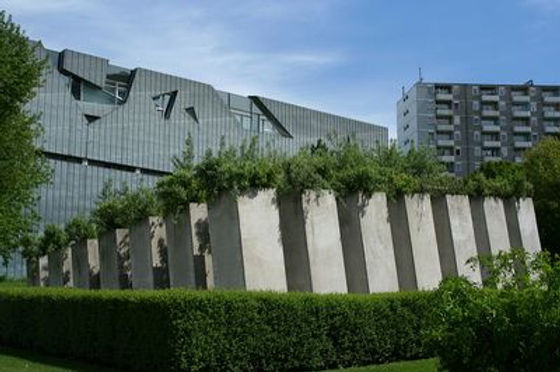
10. The Jewish Museum of Berlin | Judisches Museum Berlin
Million visitors have passed through the zigzag, exciting, depressing and thought-provoking route of this important museum. Daniel Libeskind, the architect, designed the museum as a long and broken line, symbolizing the broken and tormented life line of German Jews. The museum devotes a significant part of the exhibition to anti-Semitism, the Holocaust and extermination, but also to the importance and glory of the Jewish community in Germany and Berlin before the rise of the Nazis.
Arrival: Subway U6 station Kochstraße
Website: Jewish Museum Berlin
11. Potsdamer Platz
In this area are some of the most impressive buildings in Berlin. The state-of-the-art Sony Center with its futuristic dome is a paradise for fans of modern architecture. The building contains cafes, restaurants, a film museum, an IMAX cinema, and a large and impressive Sony company center.
Another impressive building in the area is the Chrysler Building, which belongs to the famous car company.
Arrival: Subway station Potsdamer Platz
Website: Potsdamer Platz ► Shopping, events and restaurants in Berlin

12. Holocaust Dankamel
The famous monument designed by Peter Eisenman covers 19,000 square meters, a few blocks south of Place de Paris. The monument looks a bit like a cemetery, a bit like a row of bunkers and is built of 2711 concrete blocks of different heights. Below it is an information center about the extermination of the Jewish people during World War II.
Arrival: Subway S1, S2 Brandenburger Tor station
Website: אנדרטת הקרן ליהודי אירופה שנרצחו - Stiftung Denkmal für die ermordeten Juden Europas

13. Brandenburg Gate | Brandenburger Tor
The Brandenburg Gate is one of the distinctive symbols of the city. It was designed by Karl Gotthard Langhans in the form of the entrance gate to the Acropolis. At its head is the statue of the quadriga (chariot drawn by four horses), whose cross and eagle at its head are indeed associated with the Nazi parades that passed under the bridge, but they belong to the results of the Napoleonic wars.
Arrival: Subway station Brandenburger Tor
Website: Brandenburg Gate – Berlin.de

14. Reichstag
At the end of the 19th century, it was decided to build a house for the German parliament, which would represent the strength and unity of the German people. The huge neoclassical palace, designed by Paul Vollot, succeeded in the task and became a symbol. In 1933, a fire broke out in the building. The Nazi Party blamed the Communists for the fire, and went on a violent witch hunt, which eventually led to the dictatorial rule of Hitler. At the end of the war, the destroyed Reichstag remained on the west side of the city. Except for several renovations designed to prevent its collapse, it was abandoned. With the unification of Germany and the decision to move the capital from Bonn to Berlin, it was also decided to restore the crown to its former glory and restore the building. The British Norman Foster won the competition. The facades of the Reichstag were restored and restored, its interior was rebuilt in a way that would suit the needs of the parliament, and the original dome became a glass dome from which one can look out over the city and the plenary hall, a symbol of the transparency of the new German democracy.
Opening hours: The place is open every day between 08:00 and 24:00. Entry to the Reichstag dome is only allowed to those who have booked a visit in advance on the website. If you have not arranged a visit in advance, you will be directed to a nearby station, where you can check if there are any vacancies during the upcoming visit or you will be invited to arrange a visit for the next two days (it is not possible to arrange for a more distant date). It is important to remember to bring your passport with you.
Pay attention to the street named after Yitzhak Rabin (Israel Prime Minister), which is about a hundred meters from the Reichstag.
Arrival: Subway station Brandenburger Tor
Website: German Bundestag - Homepage

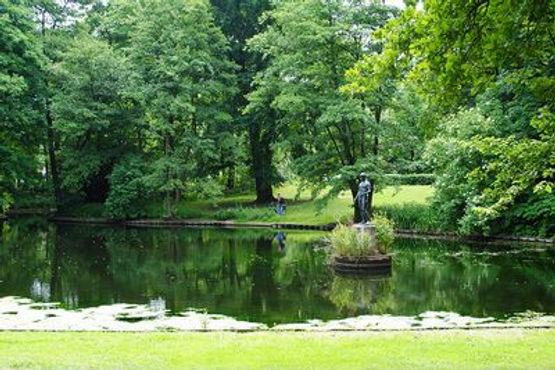
15. Tiergarten Park
Tiergarten is the largest park in Berlin and is located in the Tiergarten district. The name of the park in German means "zoo", but the park does not have and has never had a zoo. The park covers an area of about 2000 dunams and has cultivated and wild vegetation, flowers, forest trees, lakes, ducks, squirrels and rabbits. Scattered throughout the park are many statues of the nation's greats, and in the center is the "Victory Column" at a height of 69 meters.
Arrival: Subway station Tiergarten or Bellevue
Website: Senate Department for Urban Mobility, Transport, Climate Action and the Environment - Berlin.de
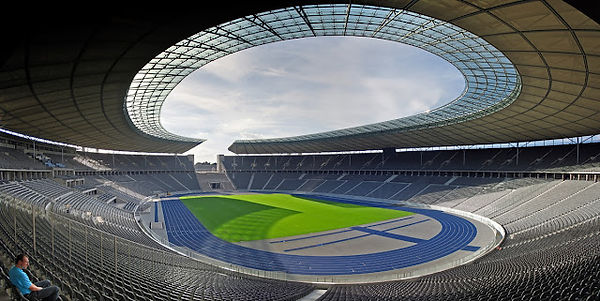
16. Berlin's Olympic Stadium
Several fateful games and competitions were held in this stadium, such as the 1936 Olympics, organized by the Nazis, the 2006 World Cup, and the 2009 World Athletics Championships. You can visit the huge stadium when it is empty or attend a BSC Berlin game.
Arrival: Subway station Neu-Westend
Website: Olympiastadion Berlin
17. Platform 17 Memorial
I think it's a must when you come to Berlin to go to this place. This is actually the platform where 55,000 Jews were sent to the extermination camps.
The place is now actually a monument, the track is blocked and remains as a monument. The most powerful thing there is the big boards on the platform: lots of boards and on each board is written the date the Jews were sent to the camps, the exact number of Jews sent on that date and to which concentration camp exactly. Lots of boards like this.
It is not easy to see it, but it is a must in my opinion and very interesting. The place now looks like a quiet and pastoral place with trees all around, and it was really hard to believe that in such a pastoral place there were such atrocities. not to miss. There are Israeli flags there and the feeling is a feeling of victory that we are still here despite everything.
Arrival: Subway S7 Grunewald station
Website: Gleis 17 memorial - Berlin.de

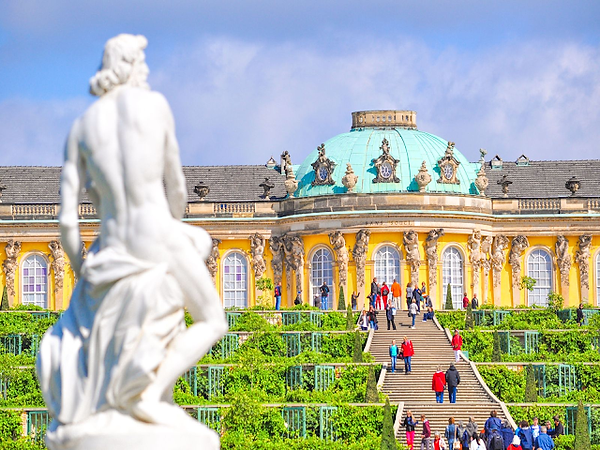
A short train ride from Berlin will take us to Potsdam, the capital and largest city of the state of Brandenburg. Contrary to what is expected from a big city, it offers a rural and peaceful atmosphere, and most of its tourist sites are concentrated at a relatively close distance from each other.
Potsdam's main street, Friedrich-Ebert Strasse, and the small streets branching off from it offer an abundance of luxury shops, restaurants, and cafes. If you haven't had breakfast yet, now is the time.
Arrival: Train S7 final station
Website: Discover Potsdam – Berlin.de
18. Potsdam
======================
Hoping that you found the blog useful and helpful!
I'm already writing the next blog 😉
======================
======================
May the blog power be with you! ✈️